If you’ve ever wanted to compost at home but felt limited by space, smell, or complexity, you’re not alone.
Traditional composting can feel impractical in apartments. It often needs outdoor space, regular turning, and patience.
That’s where bokashi composting offers a different approach.
It’s compact, low-odor, and surprisingly well-suited for indoor living whether you’re in a small apartment in Mumbai or a studio in London.
What Is a Bokashi Bin?
A bokashi bin is a small, sealed container that ferments kitchen waste instead of decomposing it in the traditional way.
Instead of relying on oxygen, bokashi uses beneficial microbes (often added through bokashi bran) to break down food waste.
The process is faster, cleaner, and more controlled which is why it works so well indoors.
Why Bokashi Works Well for Apartments
One of the biggest advantages of bokashi composting is how contained it is.
- The bin is sealed, so there’s minimal smell
- It doesn’t attract pests if used correctly
- It doesn’t need sunlight or outdoor space
- It can handle a wider range of food waste
This includes things that traditional composting often avoids, like cooked food, dairy, and even small amounts of meat.
For apartment dwellers, this makes a big difference.
What You Can Add to a Bokashi Bin
Most kitchen waste can go into a bokashi bin.
This includes:
- Fruit and vegetable scraps
- Cooked food leftovers
- Rice, bread, and grains
- Coffee grounds and tea leaves (chai patti)
- Eggshells
- Small amounts of dairy and meat
The key is balance and layering, not perfection.
What You Should Avoid
While bokashi is flexible, a few things are best avoided:
- Large bones
- Excess liquid
- Moldy or spoiled food (in large amounts)
Keeping inputs simple helps maintain a smooth fermentation process.
How Bokashi Composting Works (Step by Step)
Getting started is simpler than it sounds.
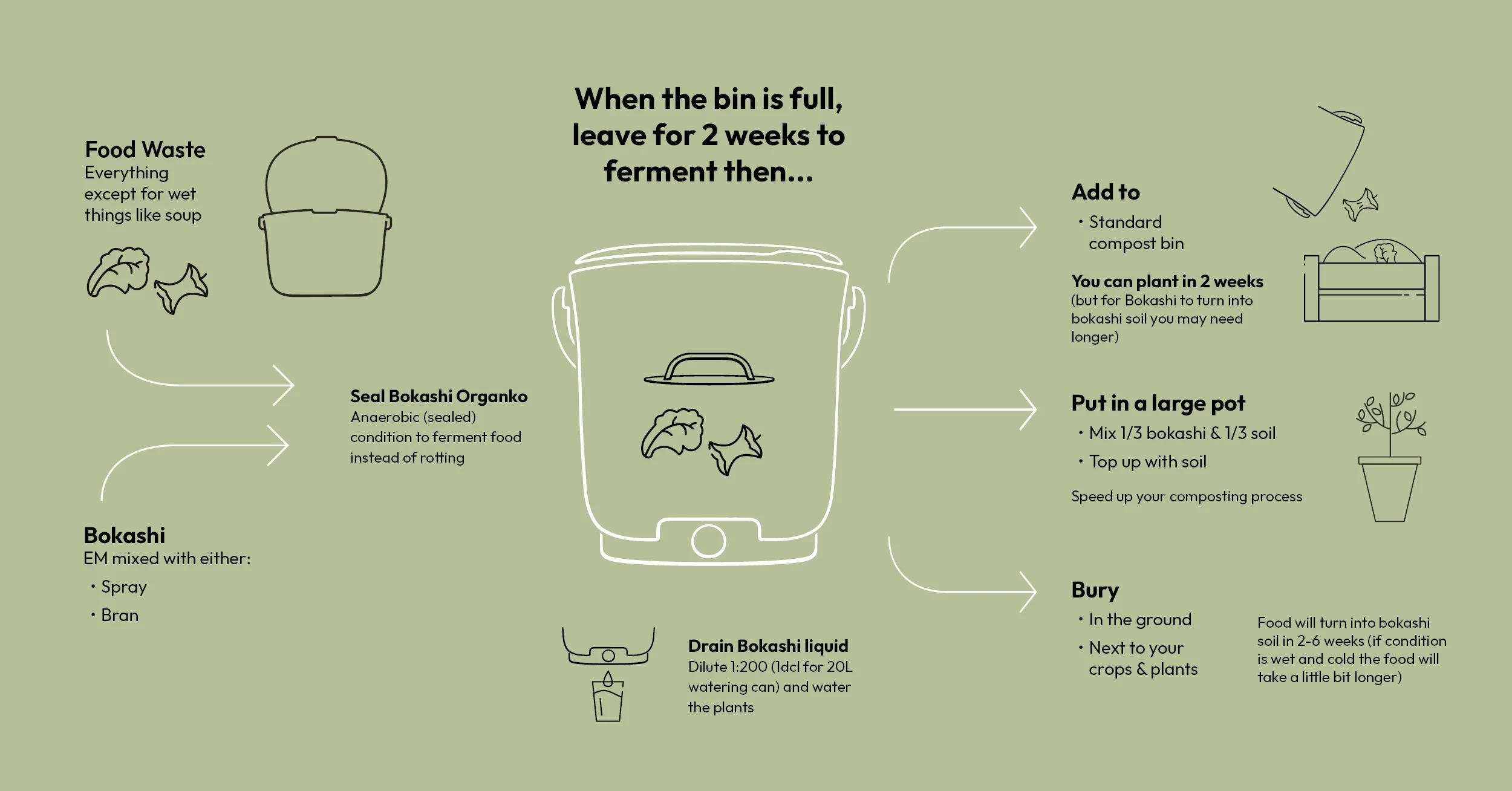
- Add a layer of food waste to the bin
- Sprinkle bokashi bran evenly on top
- Press the waste down to remove air pockets
- Close the lid tightly
Repeat this process daily or as you add waste.
Over time, the contents ferment rather than rot.
What About Smell?
This is one of the biggest concerns.
A properly maintained bokashi bin should not smell bad.
Instead, it may have a slightly sour or pickled smell.
If you notice a strong, unpleasant odor, it usually means:
- too much moisture
- not enough bokashi bran
- air entering the bin
Small adjustments usually fix the issue quickly.
What Happens After the Bin Is Full?
Once your bin is full, you let it sit for about 10–14 days to complete the fermentation process.
After that, the contents are not yet compost but they’re ready for the next step.
You can:
- bury it in soil (garden or large pots)
- add it to a compost system
- mix it into balcony planters
Over time, it breaks down into nutrient-rich soil.
Bokashi Liquid (Compost Tea)
As the waste ferments, it produces a liquid that collects at the bottom of the bin.
This is often called bokashi tea.
You can:
- dilute it and use it as a plant feed
- pour it down drains to help clean pipes
In Indian homes, this can be especially useful for balcony plants or kitchen gardens.
Common Mistakes to Avoid
Like any system, bokashi works best with small habits.
- Leaving the lid open too often
- Not using enough bokashi bran
- Adding too much liquid waste
- Overfilling the bin without pressing down
These are easy to correct once you’re aware of them.
Is Bokashi Worth It?
If you live in an apartment and want to reduce waste without complicating your routine, bokashi is one of the simplest ways to start.
It doesn’t require much space.
It doesn’t smell when managed properly.
And it helps turn everyday kitchen waste into something useful.
More than anything, it changes how you look at waste — from something to throw away, to something that can go back into the cycle.
Does a bokashi bin smell inside the house?
A properly maintained bokashi bin should not produce a strong or unpleasant smell. Instead, you might notice a mild sour or pickled scent, which is a normal part of the fermentation process. If the bin starts to smell bad, it usually means there is too much moisture, not enough bokashi bran, or air is getting inside. Keeping the lid tightly sealed and maintaining the right balance helps prevent this.
How often do I need to empty the bin?
How often you need to empty the bin depends on how much kitchen waste you generate. For most households, a bin fills up within two to three weeks. After it is full, it should be left closed for about 10 to 14 days to complete the fermentation process. Once that is done, the contents are ready to be added to soil or a compost system.
Is bokashi better than traditional composting?
Bokashi is not necessarily better than traditional composting, but it is more suitable for certain situations. It is faster, more compact, and works well indoors, which makes it ideal for apartment living. Traditional composting, on the other hand, produces finished compost directly but usually requires more space and maintenance. The choice depends on your living setup and convenience.
Do I need a balcony or garden to use bokashi?
You don’t necessarily need a balcony or garden, but having access to soil makes the process easier. The fermented waste needs to be mixed into soil to fully break down, which can be done in pots, planters, or small garden spaces. Some people also combine bokashi with other composting methods. It can be adapted to different living environments with a bit of planning.
From The Urban Sprout
Sustainable living doesn’t need to be complicated.
Sometimes, it just starts with a small bin in your kitchen.