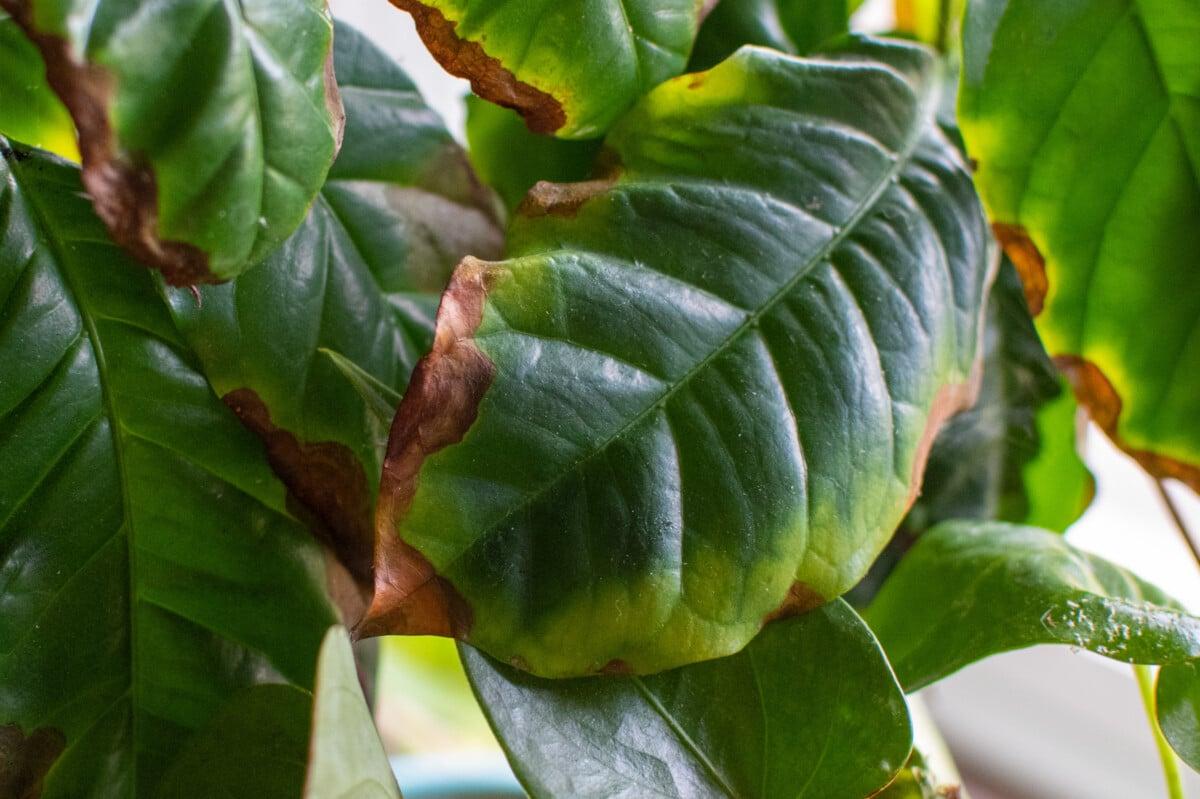
Brown leaves are one of the most common signs that something isn’t right with your plant.
It often starts subtly — a few dry edges, slight discoloration, or tips turning crisp. Over time, it becomes more noticeable, and the plant begins to lose its healthy appearance.
It can feel confusing, especially when you’re watering regularly and trying to care for the plant.
But in most cases, brown leaves are not random.
They’re a response to environmental stress — and once you understand the cause, they’re usually easy to manage.
What Brown Leaves Actually Mean
Unlike yellowing, which often signals internal imbalance, brown leaves are usually a sign of external stress.
It could be:
- lack of moisture
- excess heat
- salt or chemical buildup
- or inconsistent care
The key is to observe where and how the browning appears.
1. Underwatering (Most Common Cause)
When a plant doesn’t get enough water, it starts conserving moisture.
The first place this shows up is usually at the edges of the leaves.
You’ll notice:
- dry, crispy brown tips
- soil pulling away from the pot
- leaves feeling thin or papery
This is especially common during warmer months, when water evaporates faster particularly in Indian summers.
2. Low Humidity (Very Common Indoors)
Even if you’re watering correctly, dry air can still cause browning.
Indoor spaces especially with fans, air conditioning, or dry weather often lack humidity.
You might notice:
- brown edges instead of full leaf discoloration
- otherwise healthy-looking plant
- gradual drying over time
Plants like areca palm, calathea, and peace lily are more sensitive to this.
3. Overwatering (Yes, It Can Also Cause Browning)
This is where things get confusing.
Too much water damages roots, reducing their ability to absorb nutrients.
Over time, this stress shows up as:
- brown patches
- yellow + brown combination
- soft, weak leaves
If the soil stays wet for too long, this could be the issue.
4. Excess Sunlight or Heat
As sunlight becomes stronger especially in April and May plants may struggle with exposure.
A spot that worked in winter might now be too intense.
You might see:
- scorched patches
- browning on one side of the leaf
- drooping during the day
Balcony plants are especially vulnerable during peak afternoon sun.
5. Salt or Chemical Build-up
Tap water often contains minerals and salts. Over time, these can accumulate in the soil.
Fertilizers can also contribute if overused.
This leads to:
- brown leaf tips
- white crust on soil surface
- gradual decline in plant health
In Indian homes, this is quite common due to hard water in many cities.
How to Identify the Exact Cause
Instead of guessing, a quick check can help:
- Touch the soil → dry or wet?
- Observe light → direct or indirect?
- Check leaf pattern → edges, tips, or patches?
- Think about recent changes → movement, weather, watering
Most of the time, the answer becomes clear within a few minutes of observation.
What You Should Do
Once you identify the cause, the solution is simple:
- If dry → water deeply and consistently
- If too wet → let soil dry and improve drainage
- If low humidity → group plants or mist occasionally
- If harsh sunlight → move to indirect light
- If salt buildup → flush soil with clean water occasionally
Avoid making too many changes at once.
Plants respond better to small, consistent adjustments.
Can Brown Leaves Turn Green Again?
No, once a part of the leaf turns brown, it won’t recover.
You can trim the brown edges for appearance, but focus on new healthy growth instead.
That’s the real sign your plant is improving.
Frequently Asked Questions
Why are the tips of my plant leaves turning brown?
Brown tips are usually caused by underwatering, low humidity, or salt buildup in the soil. When the plant doesn’t get enough moisture or is exposed to dry air, the edges start drying out first. It’s a common issue in indoor environments and during warmer months. Checking soil moisture and humidity levels can help identify the exact cause.
Can overwatering cause brown leaves?
Yes, overwatering can also lead to brown leaves, although it often comes with yellowing as well. When roots stay in wet soil for too long, they lose their ability to absorb nutrients properly. This stress eventually shows up as brown patches or weak leaves. Letting the soil dry out slightly between watering helps prevent this.
Should I cut off brown parts of the leaves?
You can trim brown edges for aesthetic reasons, but it’s not necessary for the plant’s health. The damaged parts won’t turn green again, so removing them can improve appearance. However, the focus should be on fixing the underlying issue. Healthy new growth is the best indicator of recovery.
Is sunlight causing my plant leaves to turn brown?
Yes, too much direct sunlight can scorch leaves and cause browning. This is especially common during summer months when sunlight becomes more intense. If only one side of the plant is affected, light exposure is likely the reason. Moving the plant to bright but indirect light usually helps.
How do I stop my plant leaves from turning brown?
Start by identifying the cause whether it’s watering, light, humidity, or soil conditions. Adjust one factor at a time instead of making multiple changes together. Consistent care and observation are key to preventing further damage. Over time, the plant will show healthier new growth.
Brown leaves are not a sign that your plant is dying. They’re a sign that something needs adjustment. The more you observe soil, light, air, and routine the easier it becomes to understand what your plant needs.
Over time, these small signals start making sense.
From The Urban Sprout
Plants don’t fail suddenly.
They change slowly and they always give you signs.