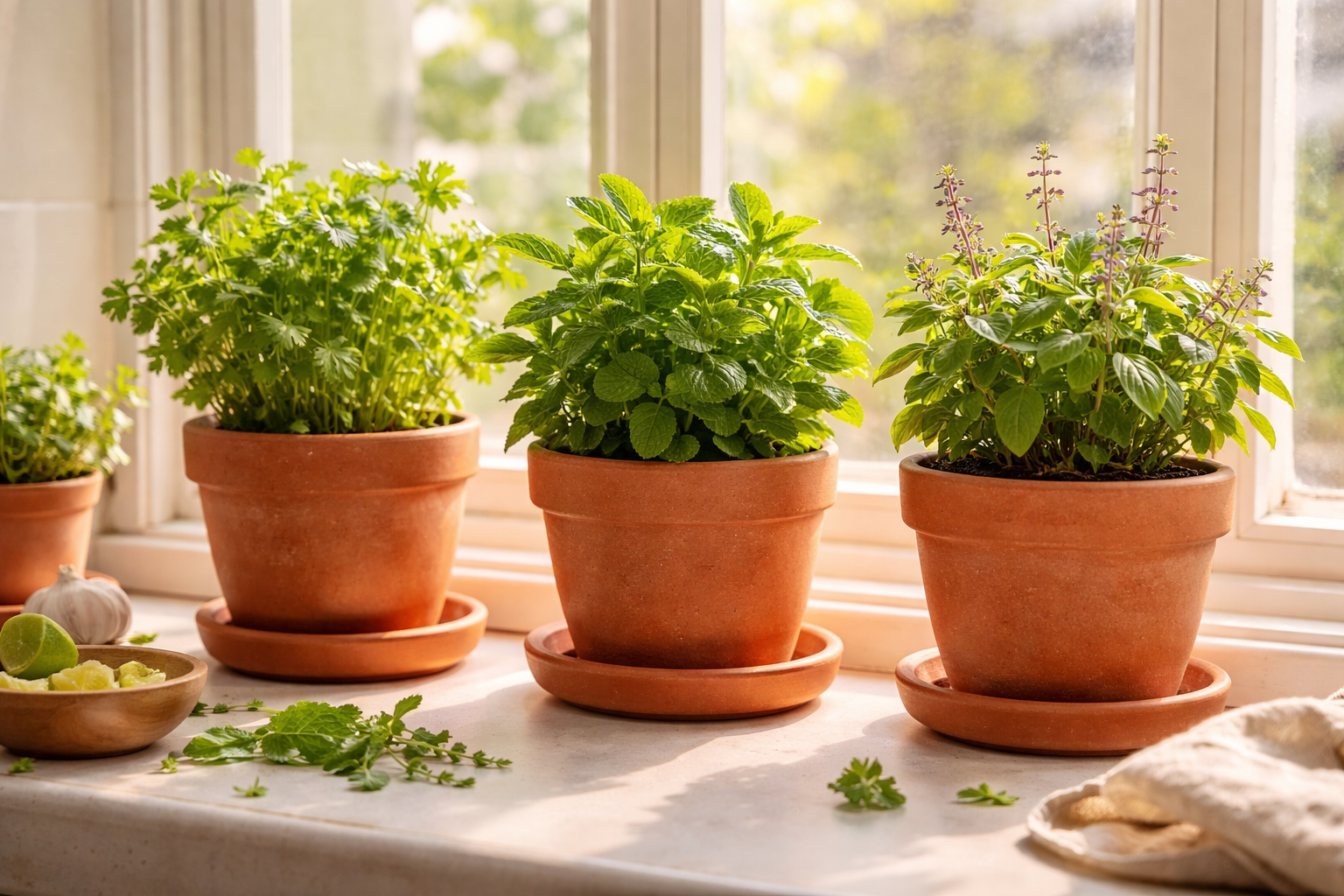
There is something satisfying about snipping fresh coriander directly into your dal.
Or pulling a few mint leaves off a pot on the windowsill for your evening chai. Growing herbs at home is one of the most practical things a home gardener can do and it does not require much space, time, or effort.
Even a single kitchen window or a small corner of a balcony is enough.
Why herbs are the best starting point
Most people start with decorative plants.
But herbs are different. They give you something back. Every time you cook, you use what you grow. That connection between your kitchen and your garden makes herb growing feel more rewarding than almost anything else.
They are also forgiving. Most herbs are fast-growing, easy to replace, and thrive in pots.
Coriander (dhaniya)
Coriander is the herb most Indian kitchens cannot do without.
It grows quickly and does not need much space. A medium-sized pot near a window that gets a few hours of indirect sunlight is enough. Sow the seeds directly into the pot — no need to start them separately.
The key thing to know is that coriander does not like being transplanted. Always sow seeds where you want the plant to grow.
Water it regularly but do not let the soil stay waterlogged. In hot weather, it may bolt to seed quickly. When that happens, let it flower, collect the seeds, and start again. The cycle is short, but so is the effort.
Coriander grows well in most climates but particularly well in the cooler months. In cities like Jaipur or Delhi, spring and winter are ideal.
Mint (pudina)
Mint is almost impossible to kill.
It spreads aggressively in the ground, which is why growing it in a pot is actually ideal. A container controls it, and you still get an endless supply of fresh leaves.
Place it somewhere with partial sunlight — near a kitchen window or on a shaded part of the balcony. Water it consistently and trim it back regularly to encourage fresh growth.
Mint is used in chutneys, raitas, lemonades, and teas. In summer, a pot of fresh pudina near the kitchen is genuinely useful every single day.
Tulsi (holy basil)
Tulsi is found in millions of Indian homes, often grown more for its cultural and spiritual significance than for cooking.
But it is also an incredibly easy herb to grow. It needs good sunlight — at least four to five hours a day — and well-draining soil. Water it when the top layer of soil feels dry.
Tulsi is more sensitive to cold and does better in warm conditions, which makes Indian summers quite suitable. In winter, move it indoors or near a warm window.
Pinching off the flower buds as they appear keeps the plant bushy and productive for longer.
Curry leaves (kadhi patta)
Curry leaves are slow to get started, but once established, they become one of the most giving plants in the kitchen garden.
They need a larger pot, plenty of sunlight, and consistent watering. In warm weather, the plant grows steadily and produces fresh leaves regularly.
One thing that surprises many first-time growers is how long it takes. Be patient with curry leaves. The plant may look still for weeks before it starts growing in earnest.
Once it does, you will always have fresh leaves for your tadka.
Basil (tulsi’s Italian cousin)
Italian basil is different from tulsi but equally easy to grow.
It needs warmth and sunlight — at least five to six hours a day. In Indian summers, it thrives on a well-lit balcony. It is more sensitive to cold than most herbs, so bring it indoors if the temperature drops significantly.
Pinch off flower heads as they appear. Once basil bolts, the leaves become bitter and less useful for cooking.
Basil is excellent for pasta, salads, and chutneys. It also pairs well with tomatoes if you happen to grow those too.
What container to use
Most herbs do well in medium-sized pots — roughly six to eight inches in diameter.
Make sure the pot has drainage holes. Herbs dislike sitting in waterlogged soil. If you are short on space, you can grow multiple herbs in a long rectangular planter, keeping the more invasive ones like mint in their own separate container.
Recycled containers — old dabbas, tin cans, even broken mugs — work well for small herbs like coriander and basil.
The right soil mix
Regular garden soil is too dense for potted herbs.
A good mix is one part cocopeat, one part compost, and one part regular soil. This keeps things light, airy, and nourishing. Cocopeat retains moisture without waterlogging. Compost feeds the plant slowly over time.
If you cannot make your own mix, any good potting mix from a nursery will work.
Where to place them
Most herbs need light, but not necessarily direct harsh sunlight.
A kitchen window that gets two to four hours of morning sun is ideal for coriander, mint, and basil. Tulsi and curry leaves need more sun, so a balcony or an east-facing window works better for them.
In summer, move pots away from walls that reflect too much heat. A little afternoon shade helps most herbs stay fresh longer.
A note for apartment growers
In apartments, the challenge is usually light, not space.
If your kitchen window does not get enough sun, try the balcony. If the balcony gets too much harsh afternoon sun, use a sheer curtain or shade cloth to filter it.
Even one or two herb pots can make a real difference to how you cook. You stop buying bundles of coriander that wilt before you finish them. You always have fresh mint for your summer drinks. Small things, but genuinely useful ones.
Frequently Asked Questions
Can I grow herbs indoors without any direct sunlight?
Herbs need at least some natural light to grow well. If you have no direct sunlight, try placing them near the brightest window in your home. South- or east-facing windows work best in India. Very low light will slow growth significantly and can weaken the plants over time.
How often should I water herb pots?
Most herbs prefer the top layer of soil to dry out slightly between watering. In warm Indian weather, this may mean watering every day or every other day. Check the soil with your finger rather than following a fixed schedule. Overwatering is a more common mistake than underwatering.
Can I grow herbs from cuttings instead of seeds?
Yes, many herbs can be propagated from cuttings. Mint in particular roots very easily in water. Place a cutting in a glass of water on a windowsill for a week or two, and you will see roots forming. Basil also works well this way.
Why does my coriander keep going to seed so quickly?
Coriander bolts (goes to seed) when temperatures rise or when it is stressed. This is natural. You can slow it down slightly by keeping the plant in partial shade during peak summer and watering consistently. Alternatively, sow seeds in small batches every few weeks so you always have fresh plants coming up.
From The Urban Sprout
The best kitchen garden is not the most elaborate one. It is the one you actually use.