Balcony gardening offers a wonderful way to grow plants in apartment homes and small urban spaces. However, one of the biggest challenges balcony gardeners face is maintaining consistent watering. Container plants tend to dry out faster than plants growing in the ground, especially during warm weather or when exposed to direct sunlight.
Missing even one day of watering can cause plants to wilt or suffer from moisture stress. This is where a self watering system becomes extremely useful. Self watering methods help plants receive moisture gradually, allowing them to stay hydrated even when the gardener is busy or away for a few days.
Fortunately, creating a self watering system for balcony plants does not require expensive equipment. Several simple techniques can provide steady moisture to container plants while reducing the need for constant watering.
Why Balcony Plants Need Consistent Watering
Plants grown in containers rely entirely on the water stored in the soil inside the pot. Unlike garden soil, container soil dries much faster because it is exposed to air from all sides.
Balconies often receive strong sunlight and wind, which increases evaporation and causes soil to dry quickly. During summer months, some balcony plants may require watering once or even twice a day.
Inconsistent watering can lead to several problems including:
- wilting leaves
- poor plant growth
- nutrient deficiency
- root stress
A self watering system helps maintain stable moisture levels, which encourages healthier root development and stronger plant growth.
How Self Watering Systems Work
Self watering systems supply water slowly and continuously rather than flooding the plant with large amounts of water at once. This allows the soil to absorb moisture gradually.
Most self watering systems rely on one of two basic principles:
gravity watering where water slowly flows from a container into the soil, or
wick watering where moisture moves from a water reservoir into the soil through absorbent material.
Both methods are simple to implement and work well for balcony container gardening.
Method 1: DIY Bottle Drip Irrigation
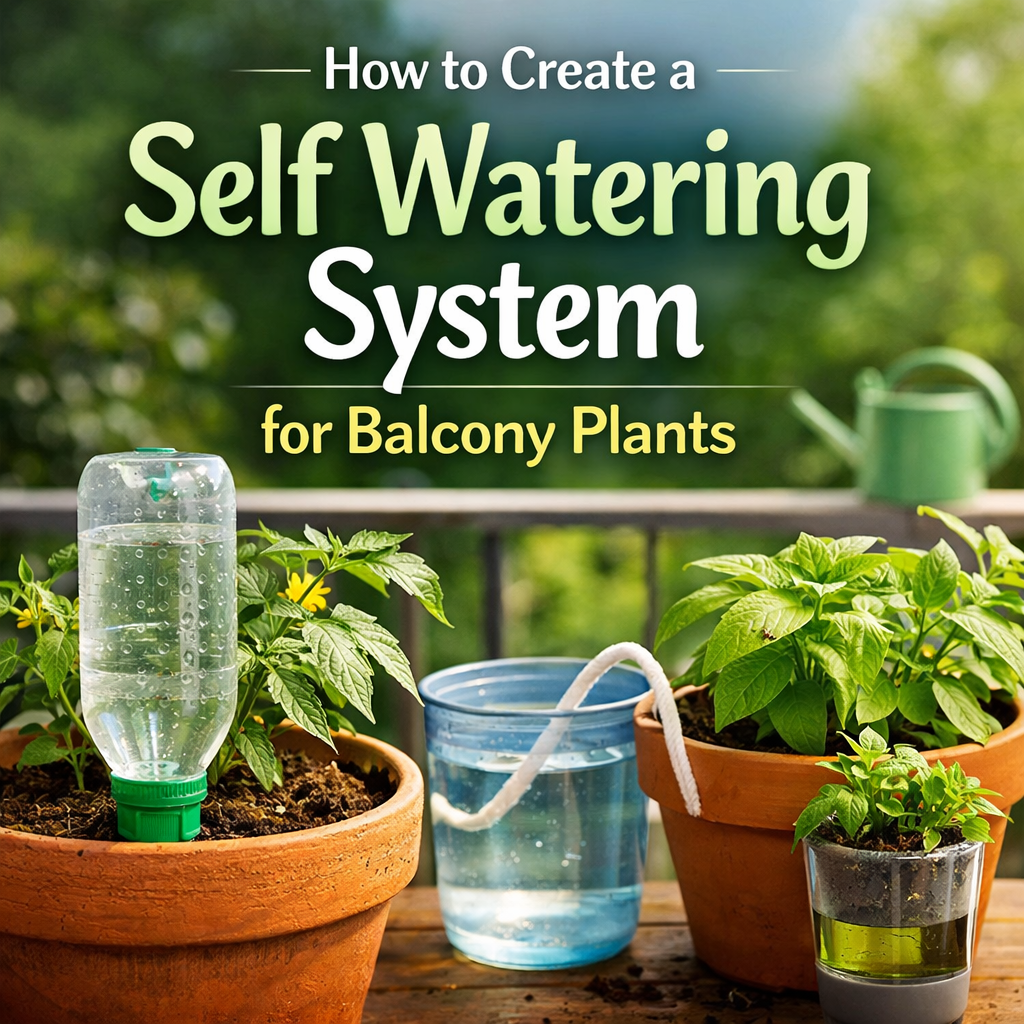
One of the easiest ways to create a self watering system is by using a plastic bottle.
How to Set It Up
- Take a clean plastic bottle.
- Make a few small holes in the bottle cap.
- Fill the bottle with water.
- Insert the bottle upside down into the soil.
Water will slowly drip into the soil as the plant absorbs moisture.
Benefits
This method is inexpensive and easy to set up. It works well for medium sized containers and can keep plants watered for several days.
Method 2: Wick Watering System
A wick watering system is another simple method that works particularly well for balcony plants.
How It Works
A cotton or fabric wick is used to draw water from a reservoir into the plant container. As the soil becomes dry, moisture travels up the wick and hydrates the plant roots.
How to Set It Up
- Place a container of water next to your plant pot.
- Insert one end of a cotton rope or cloth strip into the water.
- Place the other end deep inside the plant soil.
The wick will gradually transfer water from the container to the soil.
Benefits
This system works continuously and is very effective for maintaining consistent soil moisture.
Method 3: Self Watering Planters
Self watering planters are specially designed pots that include a water reservoir at the bottom.
These planters typically have two compartments:
- the upper section containing soil and plant roots
- the lower section holding water
Plants absorb moisture from the reservoir through capillary action, ensuring they receive water only when needed.
Although these planters cost more than DIY systems, they are convenient and require less maintenance.
Tips for Using Self Watering Systems
Even when using a self watering setup, it is important to monitor plant health and soil conditions.
Avoid Overwatering
Some plants prefer slightly drier soil conditions. Always make sure the soil has proper drainage to prevent water buildup.
Adjust Water Supply Based on Weather
During extremely hot days, plants may require additional watering. Self watering systems should be adjusted according to temperature and sunlight exposure.
Choose the Right Soil
Well draining soil mixtures help self watering systems work more effectively. Soil that holds moisture while still allowing air circulation around roots is ideal.
Monitor Water Levels
Check water containers regularly to ensure the system continues supplying moisture.
When Self Watering Systems Are Most Useful
Self watering systems are particularly helpful in certain situations.
They are useful when:
- gardeners travel for a few days
- balcony plants receive strong sunlight
- containers dry out quickly
- gardeners have limited time for daily watering
These systems provide peace of mind while ensuring plants remain healthy.
Do self watering systems work for all plants?
Most container plants benefit from consistent moisture, but some plants prefer drier soil. It is important to understand the watering needs of each plant.
How long can a DIY self watering system last?
Depending on the water container size and plant requirements, some systems can provide water for several days.
Can self watering systems prevent plant stress?
Yes. By providing consistent moisture, self watering systems help reduce stress caused by irregular watering.
Balcony plants depend entirely on the care provided by the gardener, and maintaining consistent watering is one of the most important aspects of plant health. Self watering systems offer a practical solution for keeping container plants hydrated without constant attention.
Whether using a simple bottle irrigation setup, a wick watering system, or specialized self watering planters, these methods help maintain stable soil moisture and support healthy plant growth.
By implementing a self watering system, balcony gardeners can enjoy thriving plants while reducing the pressure of daily watering routines.