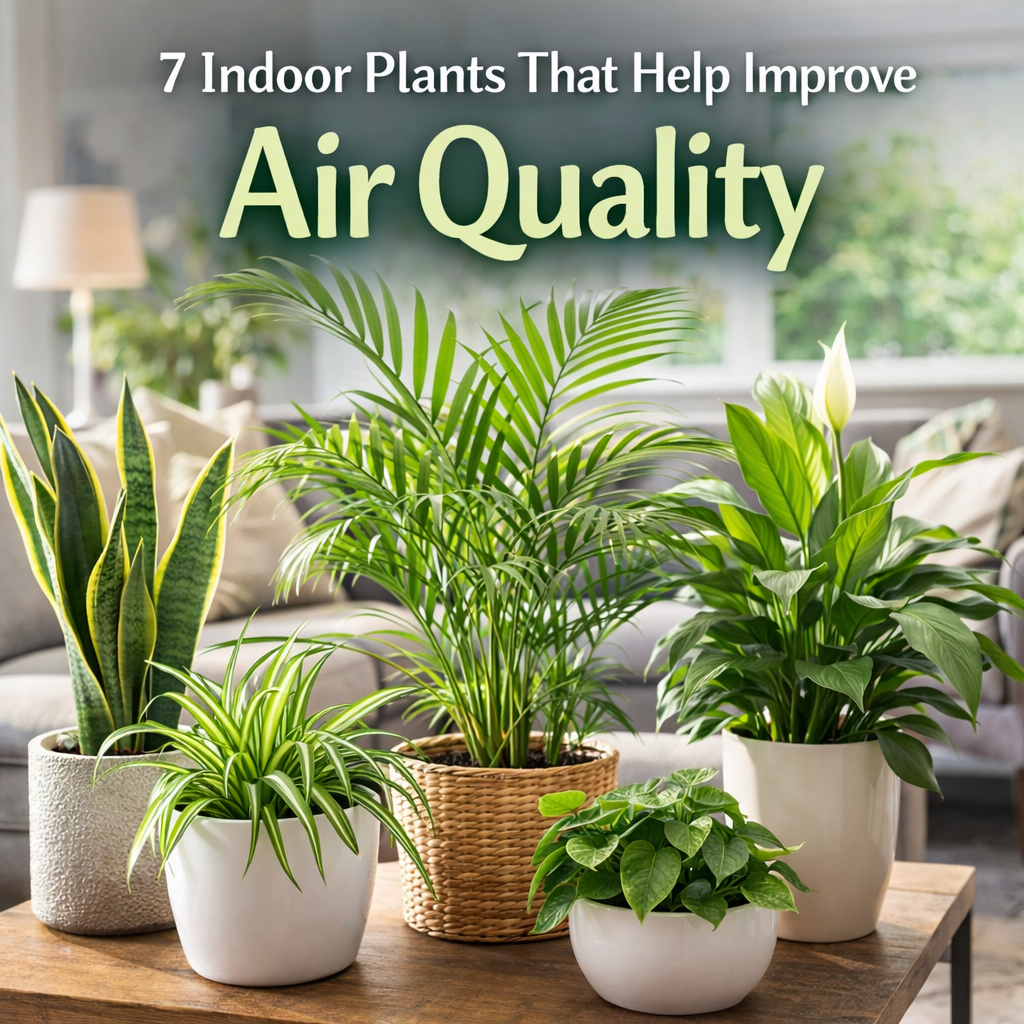
Indoor plants are widely appreciated for their beauty and calming presence, but they also play an important role in creating healthier living environments. Modern homes often contain indoor pollutants from furniture, cleaning products, paints, and building materials. These substances can affect indoor air quality over time.
While houseplants cannot completely replace proper ventilation, they can contribute to a fresher indoor atmosphere and improve the overall environment inside homes. Plants naturally absorb carbon dioxide and release oxygen during photosynthesis, and their leaves and soil microbes can also help break down certain airborne compounds.
Adding a few well chosen indoor plants can make living spaces feel healthier, greener, and more relaxing.
Below are some of the most popular indoor plants known for supporting cleaner indoor environments.
1. Snake Plant
Snake plants are among the most resilient indoor plants and are often recommended for beginners. Their upright leaves require very little maintenance and they tolerate a wide range of lighting conditions.
Snake plants are known for their ability to continue producing oxygen even during the night through a process called CAM photosynthesis. Because of this characteristic, they are often placed in bedrooms.
These plants require minimal watering and can thrive even in low light environments, making them ideal for apartments and indoor rooms.
2. Peace Lily
Peace lilies are elegant plants known for their glossy leaves and distinctive white flowers. They grow well in moderate to low light environments and are commonly used in indoor spaces.
Peace lilies can help absorb certain airborne compounds while also increasing humidity levels in the surrounding environment. Their attractive appearance also makes them a popular decorative plant for living rooms and offices.
These plants prefer slightly moist soil and indirect light.
3. Spider Plant
Spider plants are one of the easiest indoor plants to grow. Their long arching leaves and small plant offshoots make them visually appealing.
Spider plants adapt well to indoor conditions and require relatively simple care. They are known to grow quickly and produce new baby plants that can be propagated easily.
Because they tolerate a wide range of conditions, spider plants are ideal for beginners starting their indoor gardening journey.
4. Aloe Vera
Aloe vera is widely known for its medicinal properties and its soothing gel, but it also serves as an excellent indoor plant.
Aloe plants grow best in bright light and require minimal watering. Their thick leaves store water, allowing them to survive even when watering is infrequent.
Besides their practical uses, aloe plants also contribute to improving indoor environments by producing oxygen and adding greenery to indoor spaces.
5. Areca Palm
Areca palms are popular indoor plants that add a tropical appearance to homes. Their long feathery leaves create a lush atmosphere in indoor rooms.
These plants are often appreciated for their ability to increase indoor humidity levels, which can make indoor environments feel more comfortable, especially in dry climates or during winter months.
Areca palms grow best in bright indirect light and require moderate watering.
6. Pothos
Pothos plants are widely recognized for their trailing vines and heart shaped leaves. They grow easily in containers and can adapt to a variety of lighting conditions.
Pothos plants are particularly popular in indoor spaces because they are highly tolerant of beginner mistakes. They require minimal care and can grow both in soil and water.
Their trailing growth habit makes them perfect for shelves, hanging baskets, and indoor plant displays.
7. Bamboo Palm
Bamboo palms are elegant indoor plants that create a natural and calming atmosphere. Their soft green leaves bring a tropical appearance to indoor environments.
These plants grow well in shaded indoor spaces and require consistent but moderate watering.
Bamboo palms are often used in offices and homes to create greener interior environments.
How Indoor Plants Support Healthier Homes
Indoor plants contribute to better indoor environments in several ways.
They help create visual comfort, reduce stress, and introduce natural elements into living spaces. The presence of plants can also increase humidity slightly and encourage better indoor air circulation.
While plants alone cannot eliminate indoor pollutants entirely, they can complement other healthy practices such as proper ventilation, natural cleaning products, and maintaining clean indoor spaces.
Combining plants with good indoor air habits creates the most balanced approach to maintaining healthy homes.
Do indoor plants really purify air?
Indoor plants can help improve indoor environments by absorbing carbon dioxide and interacting with certain airborne compounds, but they should be combined with proper ventilation for the best results.
How many plants should be kept indoors?
Even a few plants can improve the feel of indoor spaces. Larger rooms may benefit from several plants placed around the room.
Which plant is easiest for beginners?
Snake plants and pothos are often considered the easiest indoor plants because they tolerate a wide range of conditions.
Indoor plants offer many benefits beyond decoration. They bring natural beauty into homes, create calming environments, and contribute to healthier living spaces.
Choosing low maintenance plants such as snake plants, peace lilies, and pothos makes it easy for beginners to introduce greenery into their homes. With proper care and placement, indoor plants can thrive while enhancing the comfort and atmosphere of indoor living spaces.